The MCIE meeting held on August 19 at the Chaffey College InTech training center provided ample time for valuable networking, followed by a comprehensive agenda.
The meeting commenced with the MCIE board president, who outlined the findings of the Catalyst grant-sponsored assessments. These assessments revealed that nearly all assessed firms have identified areas requiring additional effort to capture the knowledge held by key employees. This knowledge is crucial for scaling up operations effectively.
Sandra Sisco, director of the MCIE program, further elaborated on the MCIE’s commitment to completing 30 assessments and 20 modernization roadmaps. These initiatives are expected to continue until the end of the year.
Alfonso Aramburo, a consultant involved in the assessments, provided a concise overview of the assessment and roadmapping process. He identified common gaps in nearly all companies, highlighting the challenges of adapting to evolving product demands, process changes, and the complexities of documentation.
(In a recent MCIE meeting at the California Steel conference room, in collaboration with Roadmap 4 Innovation, a lecture on E.M. Goldratt’s “Theory of Constraints” was presented. This lecture emphasized the importance of identifying and addressing constraints to enhance capacity. The insights gained from the lecture proved beneficial in this context.)
Given the impracticality of documenting every aspect of operations, it is essential to determine the starting point. This typically involves identifying processes that generate the most significant issues, such as quality concerns, downtime, training challenges, safety hazards, or processes reliant on a limited number of individuals.
Once the problematic processes are identified, the appropriate documentation type is determined. This may include formal Standard Operating Procedures, visual aids, work instructions, videos, or mistake-proofing solutions.
The primary objective is not to generate excessive paperwork but rather to facilitate the transfer of knowledge and enhance execution consistency. Alfonso emphasized the potential of technology, such as video capture, as a valuable tool in this process, rather than relying solely on individuals to manually draft Standard Operating Procedures.
Introducing Kenny Weisbart, officer at AR Tech
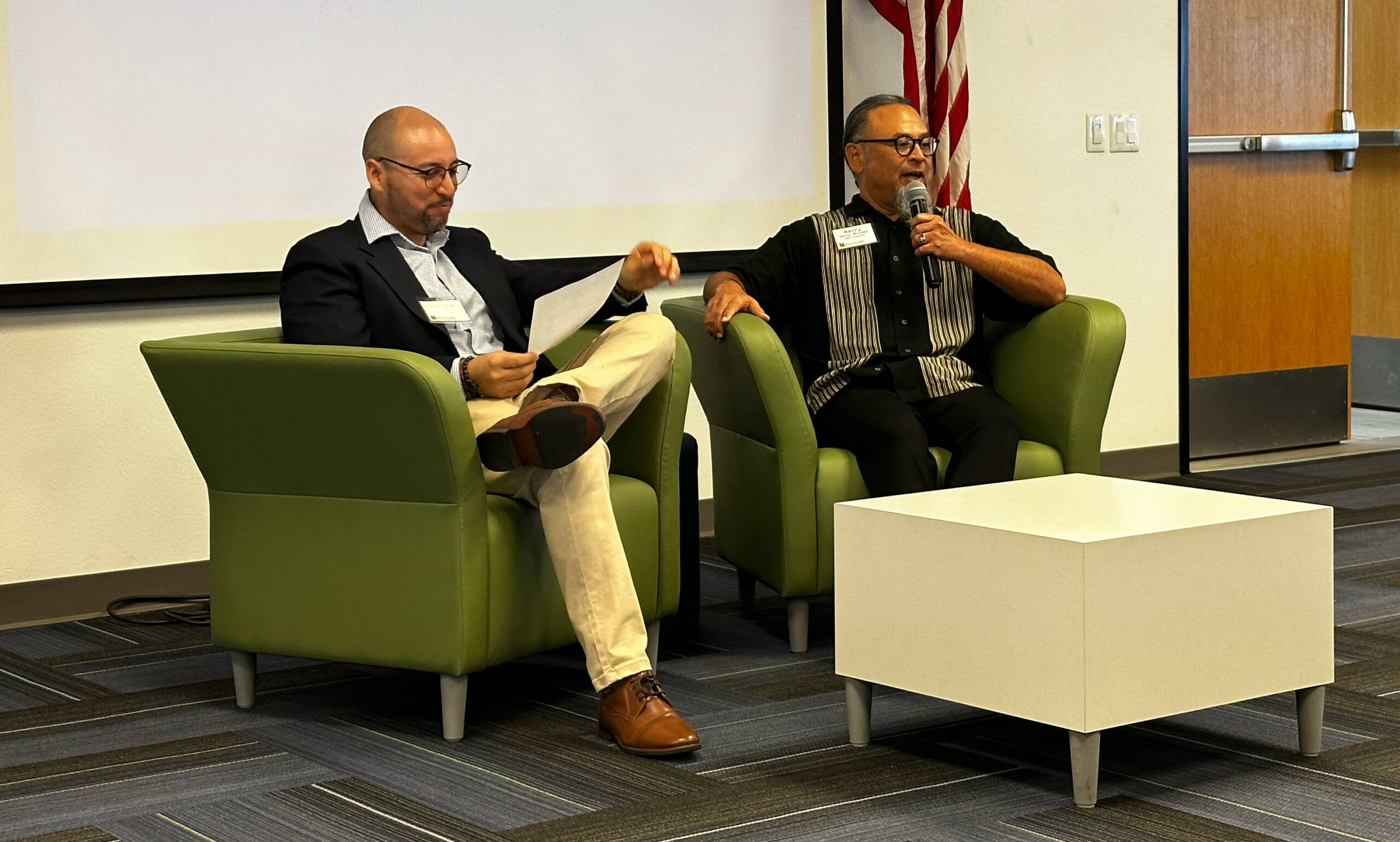
Alfonso Aramburo has conducted the assessment and roadmapping process at AR Tech, also known as A & R Tarpaulins, in Fontana. AR Tech is experiencing rapid growth, particularly in its aerospace product line, which presents a challenge that the company is actively addressing.
Kenny Weisbart highlighted the significance of obtaining an external perspective to identify opportunities and provide a comprehensive roadmap for improvement. The roadmap identifies the bottleneck, its underlying causes, available resources, and the most impactful actions. The MCIE roadmapping process can assist manufacturers in transitioning from identifying challenges or problems to developing actionable next steps.
UC Riverside’s Advanced and Integrated Manufacturing Hub
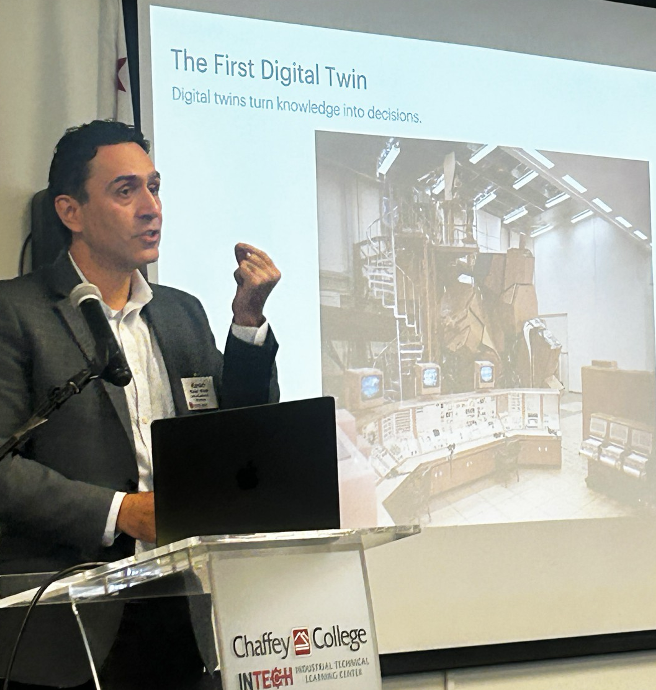
Dr. Kavan Hazeli, a distinguished researcher at UCR, unveiled the newly established Advanced Manufacturing Research and Education Hub. He elucidated the hub’s mission and vision, which aim to elevate Riverside to the forefront of Southern California’s industrial metamorphosis.
To accomplish this objective, the AIM Hub will “reimagine engineering education and innovation by transcending traditional disciplinary boundaries and fostering an integrated, industry-interconnected ecosystem.” While this endeavor will primarily benefit the manufacturing sector, it necessitates a substantial expansion of partnerships with industry, employing innovative approaches.
Dr. Hazeli presented the concept of Digital Twins, detailing its initial application in the space program, and elucidating how industry will leverage UCR’s equipment for simulating, testing, and optimizing products, machinery, or plants. This process will enable the prediction of performance.
The AIM Hub at UCR is designed to establish enduring collaborations, rather than a transient, project-specific approach. The ultimate objective is to facilitate collaborative problem-solving among stakeholders by engaging with the AIM Hub.
Chaffey InTech Training Center
Preethi Talwar, the director of the InTech Training Center, elucidated her responsibilities in workforce development and guided the audience through a tour of the training facility. She and Sandra Sisco elucidated the public-private partnership between the Manufacturers’ Council and the community colleges of the Inland Empire, which secured funding of $15 million from the U.S. Department of Labor to establish the center. Additionally, several million dollars were provided by California Steel Industries for the refurbishment of “Building A” of the steel mill campus. Irene Gishwiller, the manager of career training and workforce development at InTech, facilitated the tour.
A Taste of Things to Come
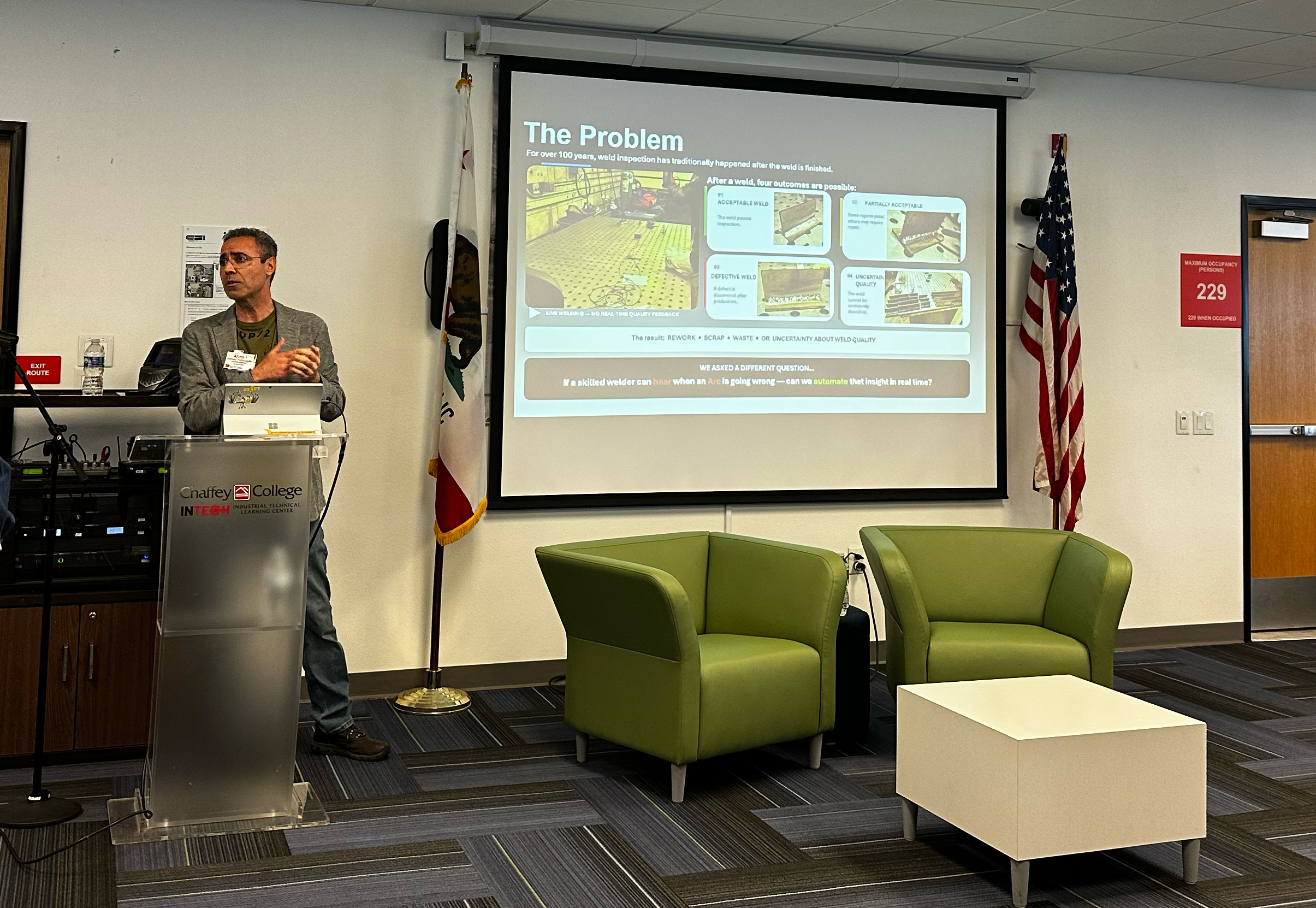
For individuals specifically interested in a novel invention for MIG arc welding, a concise description was provided by UCR Professor Ahmad Foroutaghe. This invention comprises a sound sensor, designed to be mounted on a welder’s helmet, and an artificial intelligence computer pad. The objective of this technology is to assist the welder by “learning” when the sound of a weld is erroneous and prompting the welder to halt the welding process.
Dr. Foroutaghe, in collaboration with his firm, ArcMetrics, is seeking input from ten companies, in addition to the InTech trainers, who are eager to experiment with this technology. The purpose of this feedback is to evaluate the effectiveness and potential of the invention.